Description
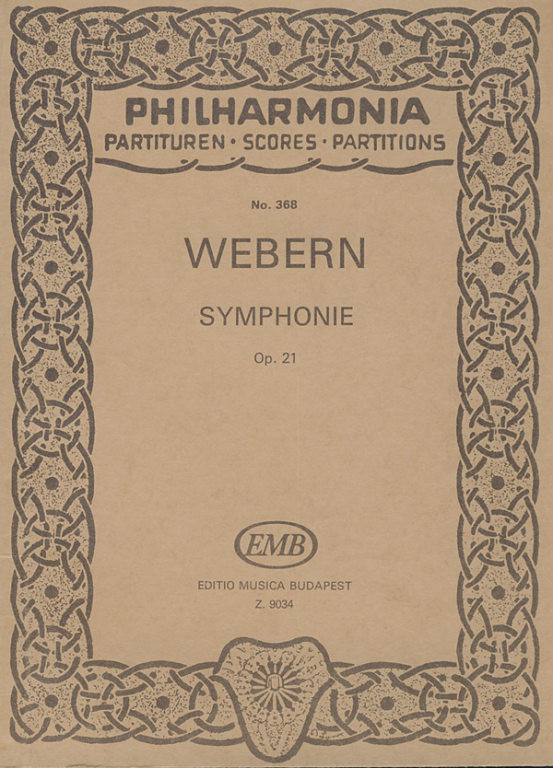
Mathematical Purity in Sound: Anton Webern’s Symphony, Op. 21
- Product Type: Pocket Score / Kispartitúra (Paperback)
- UPC/ISMN: 9790080090343 / 979-0-080-09034-3
- Brand Name: Editio Musica Budapest Zeneműkiadó
- MPN: 9034
- Composer: Anton Webern (1883–1945)
- Series: Philharmonia Study Scores
- Setting: Small Orchestra / Chamber Symphony
- Period: 20th Century (Second Viennese School)
- Language: Hungarian, German, English
Overview
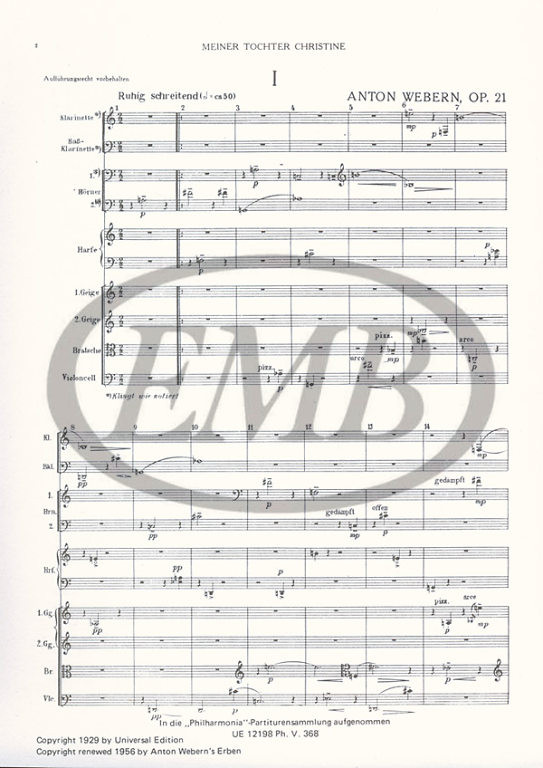
Anton Webern’s Symphony, Op. 21 (1928) is a landmark of 20th-century modernism and a pinnacle of the twelve-tone technique. This 1984 pocket score, published by Editio Musica Budapest as part of the Philharmonia Study Scores series, offers an intimate look at Webern’s "pointillist" style.
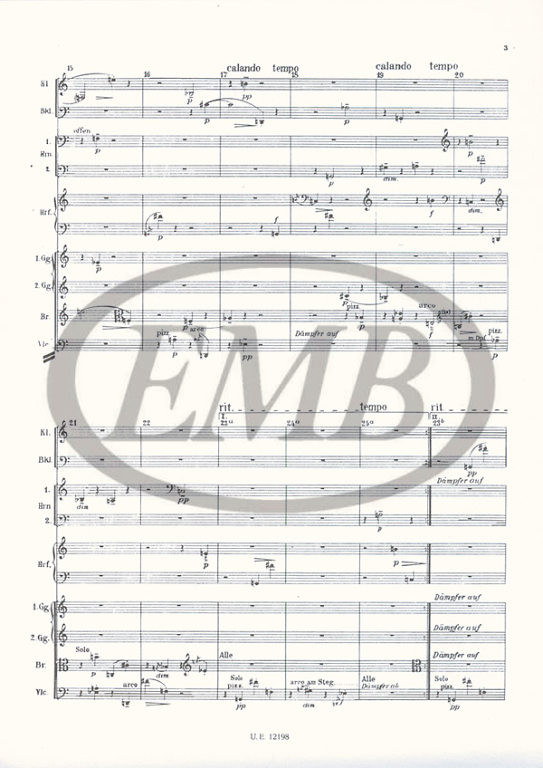
The work is famous for its extreme brevity (lasting only about 10 minutes) and its incredible structural density, utilizing complex canons and symmetrical rows. This score is an essential tool for students of composition, conductors, and music theorists who wish to study the crystalline precision and revolutionary "Klangfarbenmelodie" (tone-color melody) that defined the Second Viennese School.
Magyar nyelvű áttekintés
Anton Webern Szimfóniája (op. 21) a 20. századi modernizmus mérföldköve és a tizenkétfokú technika (dodekafónia) egyik csúcspontja. Ez az 1984-es kispartitúra, amelyet az Editio Musica Budapest jelentetett meg a Philharmonia sorozat részeként, bepillantást enged Webern „pointillista” stílusába.
A mű híres rendkívüli tömörségéről (mindössze 10 perc hosszú) és elképesztő szerkezeti sűrűségéről, amelyben bonyolult kánonok és szimmetrikus hangsorok váltják egymást. Ez a partitúra nélkülözhetetlen eszköz zeneszerzés-hallgatók, karnagyok és zeneteoretikusok számára, akik tanulmányozni szeretnék azt a kristálytiszta precizitást és forradalmi „Klangfarbenmelodie”-t (szín-dallam játékot), amely a második bécsi iskolát jellemezte.
Product Features
- Format: A/5 (14.2 x 20 cm) - Pocket Score
- Length: 28 Pages
- Series: Philharmonia Study Scores (Philharmonia kispartitúrák)
- Instrumentation: Clarinet, Bass Clarinet, 2 Horns, Harp, and Strings (Violins I/II, Viola, Cello).
- Published: March 1984
- Origin: Made in Hungary
Interesting Facts
- The Master of Brevity: Webern was known for his aphoristic style. His entire life's work fits onto just a few CDs, yet his influence on post-war avant-garde music (like Boulez and Stockhausen) was monumental.
- Symmetry: The tone row used in Op. 21 is a "palindrome" (the second half is the retrograde of the first half transposed), creating a musical structure that is perfectly balanced like a crystal.
- Orchestration: Despite the title "Symphony," the orchestration is very sparse, emphasizing the individual timbre of each instrument rather than a traditional orchestral "mass."
Érdekességek
- A tömörség mestere: Webern híres volt aforisztikus stílusáról. Életműve néhány CD-n elfér, mégis a háború utáni avantgárdra (mint Boulez vagy Stockhausen) gyakorolt hatása monumentális volt.
- Szimmetria: Az op. 21-ben használt hangsor egy „palindrom” (a második fele az első fele rákfordításának transzponáltja), így a zenei szerkezet olyan tökéletesen kiegyensúlyozott, mint egy kristály.
- Hangszerelés: A „szimfónia” cím ellenére a hangszerelés rendkívül áttetsző, az egyes hangszerek egyedi szubjektív színét hangsúlyozza a hagyományos zenekari „tömeggel” szemben.
Movement Structure
- Ruhig schreitend (Quietly stepping) – A complex double canon in four parts.
- Variationen (Variations) – A series of seven variations on a symmetrical theme.
Publishers
Editio Musica Budapest Zeneműkiadó (1984) Item number: 9034 / ISMN: 9790080090343
We value your feedback! Share your experience with this product to help others make informed decisions. Your review is important to us!
#Webern #SymphonyOp21 #ModernMusic #PocketScore #12ToneMusic #EditioMusicaBudapest #MusicTheory #SecondVienneseSchool #StudyScore #Kotta #AntonWebern #Szimfónia #Kispartitúra #Zeneszerzés