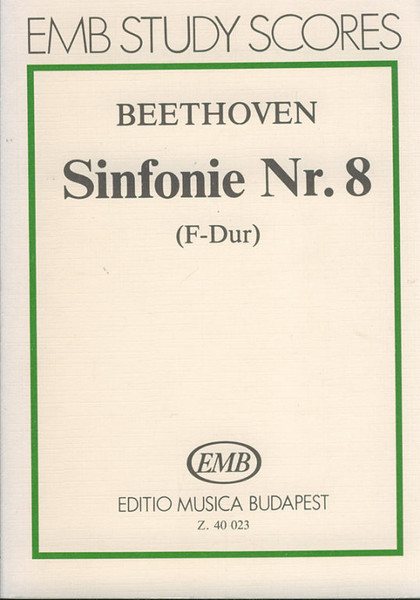
Description
Rhythmic Transcendence: Beethoven Symphony No. 7 in A Major Op. 92 (Pocket Score)
Product Details
- Product Type: Orchestral Score / Pocket Score (Study Score)
- Composer: Ludwig van Beethoven
- Editor: Darvas Gábor
- Brand/Publisher: Editio Musica Budapest Zeneműkiadó (EMB)
- Title: Symphony No. 7 in A major / VII. szimfónia (A-dúr)
- ISMN: 9790080400227 / 979-0080400227
- Item Number: 40022
- Series: EMB Study Scores (Pocket Scores)
- Genre: Classical Music / Orchestral
- Setting: Symphony Orchestra
- Length: 148 pages
Overview
This is the compact pocket score (kispartitúra) of Ludwig van Beethoven's Symphony No. 7 in A Major, Op. 92, published by Editio Musica Budapest and prepared by the distinguished musicologist, Darvas Gábor.
Often referred to as the "Apotheosis of the Dance" (a term coined by Richard Wagner), the Seventh Symphony is a powerful, joyous work characterized by its insistent, driving rhythms that permeate all four movements. It is a work of unrelenting kinetic energy, particularly famous for its solemn yet relentless second movement, the Allegretto. Composed between 1811 and 1812, this symphony was an immediate success at its 1813 premiere. This portable A/5 format score is an essential tool for students, conductors, and music analysts who seek to understand Beethoven's mastery of rhythmic propulsion and grand symphonic architecture.
Áttekintés (Hungarian)
Ez Ludwig van Beethoven VII. szimfóniájának (A-dúr), op. 92 kompakt kispartitúrája (pocket score), melyet az Editio Musica Budapest adott ki és a kitűnő zenetudós, Darvas Gábor készített elő.
Gyakran „A tánc apoteózisának” nevezik (ezt a kifejezést Richard Wagner alkotta meg), a Hetedik Szimfónia erőteljes, örömteli mű, amelyet az mind a négy tételen áthatoló kitartó, hajtó ritmusok jellemeznek. A szüntelen kinetikus energia műve, különösen híres a méltóságteljes, mégis kitartó második tételéről, az Allegretto-ról. 1811 és 1812 között komponálták, és az 1813-as premierjén azonnali sikert aratott. Ez a hordozható A/5-ös formátumú kotta elengedhetetlen eszköz diákok, karmesterek és zenei elemzők számára, akik meg akarják érteni Beethoven ritmikus hajtóerejének és nagyszerű szimfonikus felépítésének mesteri kezelését.
Product Features
- Format: Paperback (Pocket Score / Study Score)
- Pages: 148 pages
- Dimensions: A/5 (14.2 x 20 cm) – Ideal, compact size for academic or travel study.
- Period: Classical Era (Transitional Masterpiece)
- Publication Date: 1982
- Origin: Made in Hungary
Interesting Facts
- The Premiere: The symphony's premiere in Vienna in 1813 was a huge success, performed at a charity concert for soldiers wounded in the Battle of Hanau. The popularity of the Allegretto movement was so great that it was often encored and became one of Beethoven's most famous movements during his lifetime.
- The Rhythmic Core: Unlike other symphonies that focus on melodic or harmonic complexity, the Seventh is fundamentally driven by rhythm. The entire piece, especially the finale, maintains an almost manic energy and dance-like quality.
- Critical Reception: While critics like Wagner praised its spirit, some early commentators found its energy excessive or even eccentric. Composer Carl Maria von Weber reportedly said Beethoven was "ripe for the madhouse" after hearing the wild, repetitive rhythms of the final movement.
Érdekességek (Hungarian)
- A premier: A szimfónia 1813-as bécsi bemutatója hatalmas siker volt, amelyet a Hanaui csatában megsebesült katonák javára rendezett jótékonysági koncerten adtak elő. Az Allegretto tétel népszerűsége olyan nagy volt, hogy gyakran megismételték, és Beethoven életében az egyik leghíresebb tételévé vált.
- A ritmikai mag: Más, melodikus vagy harmonikus komplexitásra fókuszáló szimfóniákkal ellentétben a Hetedik alapvetően a ritmus által vezérelt. Az egész darab, különösen a finálé, szinte mániákus energiát és táncszerű minőséget tart fenn.
- Kritikai fogadtatás: Bár a kritikusok, mint Wagner, dicsérték szellemét, néhány korai kommentátor túlzottnak vagy akár excentrikusnak találta az energiáját. Carl Maria von Weber zeneszerző állítólag azt mondta, hogy Beethoven „érett a diliházra”, miután meghallotta a záró tétel vad, ismétlődő ritmusait.
Movement Listing
The score contains the four movements of the Symphony No. 7:
- Poco sostenuto – Vivace (A long, dramatic introduction leading to a vigorous Vivace)
- Allegretto (A solemn, famous movement built on a hypnotic dactylic rhythm)
- Presto (A dazzling, fast Scherzo and Trio)
- Allegro con brio (A frantic, exhilarating, and rhythmically intense finale)
Publishers
Editio Musica Budapest Zeneműkiadó (EMB)
We value your feedback! Share your experience with this product to help others make informed decisions. Your review is important to us!
Hashtags
#Beethoven #SymphonyNo7 #AMajorSymphony #Opus92 #PocketScore #StudyScore #DarvasGábor #OrchestralScore #ClassicalMusicStudy #EditioMusicaBudapest
Hashtags (Hungarian)
#Beethoven #VII_Szimfónia #Adúr #Kispartitúra #TanulmányiKottta #DarvasGábor #ZenekariKottta #KlasszikusZene #EditioMusicaBudapest #SzimfóniaVásárlás