Description
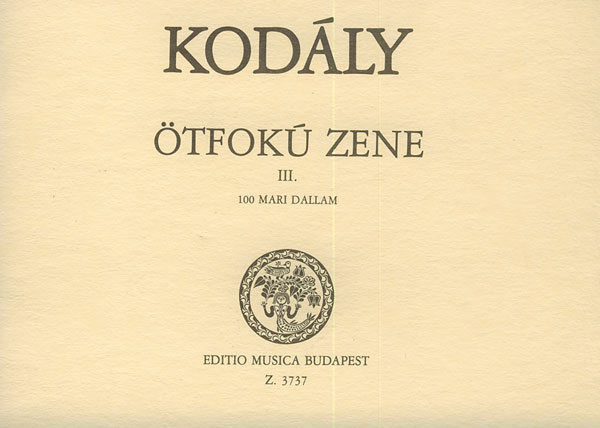
Explore the Roots of Hungarian Music: Kodály Zoltán's Ötfokú zene 3 - 100 Mari Melodies
Product Details
- Product Type: Sheet Music / Educational Music Book
- Title: Pentatonic Music 3 (Ötfokú zene 3)
- Subtitle: 100 Mari Melodies (100 mari dallam)
- Author/Composer: Zoltán Kodály
- Brand/Publisher: Editio Musica Budapest Zeneműkiadó
- Series: Kodály's Educational Works (Kodály pedagógiai művei)
- Genre: Music Theory, Solfege, Ethnomusicology
- Setting: Vocal, Solfege
- ISMN: 979-0080037379
- Item Number: 3737
- Language: Hungarian
- Release Year: 1961 (First Published)
- Origin: Made in Hungary
Overview
Volume 3 of Zoltán Kodály's influential Pentatonic Music (Ötfokú zene) series offers 100 Mari Melodies, a culturally rich collection vital for music students and educators using the renowned Kodály Method. This volume continues Kodály's work of using folk music to develop fundamental musical skills, specifically focusing on the pure pentatonic scale.
By incorporating the songs of the Mari people (a Finno-Ugric group residing near the Volga River and linguistically related to Hungarians), Kodály bridges geographic and historical distances. These 100 Mari folk songs provide essential, non-traditional material for solfege training, strengthening a student's sense of pitch, rhythm, and melodic contour, and reinforcing the ancient pentatonic connection shared by the two cultures. This book is a must-have resource for advanced solfege practice and music theory study.
Áttekintés (Hungarian)
Kodály Zoltán nagy hatású Ötfokú zene sorozatának 3. kötete 100 mari dallamot tartalmaz. Ez a kulturálisan gazdag gyűjtemény alapvető fontosságú a világhírű Kodály-módszert használó zenészek és pedagógusok számára. A kötet folytatja Kodály munkáját, mely a pentaton skála tiszta hangjain keresztül fejleszti az alapvető zenei készségeket, népzenét használva.
A mari nép (a Volga mentén élő finnugor csoport, akik nyelvileg rokonok a magyarokkal) dalainak beépítésével Kodály hidat épít földrajzi és történelmi távolságok között. Ez a 100 mari népdal alapvető, nem hagyományos anyagot biztosít a szolfézs képzéshez, erősítve a hallgató hangérzékelését, ritmusát és dallamkontúrját, megerősítve a két kultúra ősi pentaton kapcsolatát. A könyv elengedhetetlen forrás a haladó szolfézs gyakorláshoz és a zeneelméleti tanulmányokhoz.
Product Features
- Format: Paperback, Landscape format (B/6 quer)
- Dimensions: 17 x 12 cm
- Length: 36 pages
- Instrumentation: Vocal / Solfege (Ének, Szolfézs)
- Educational Level: Intermediate Solfege and above
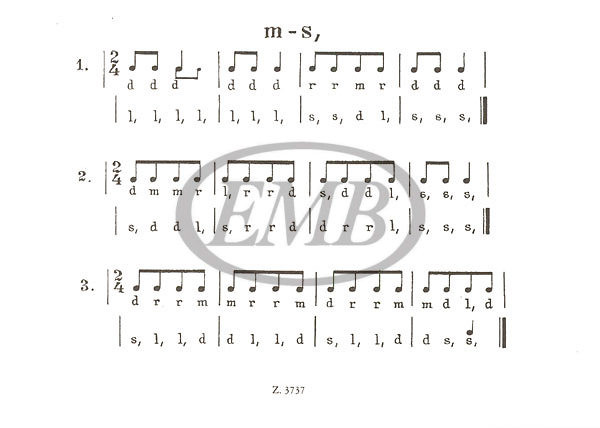
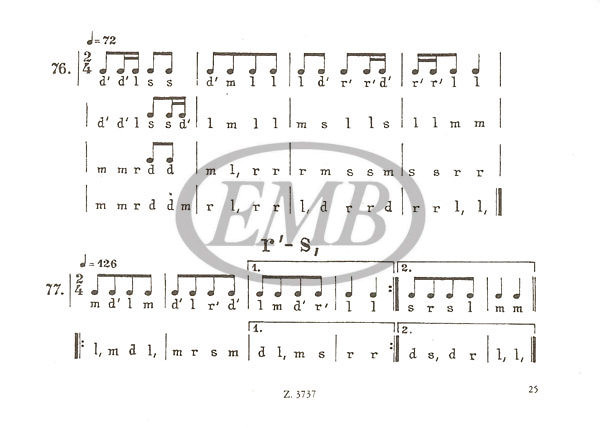
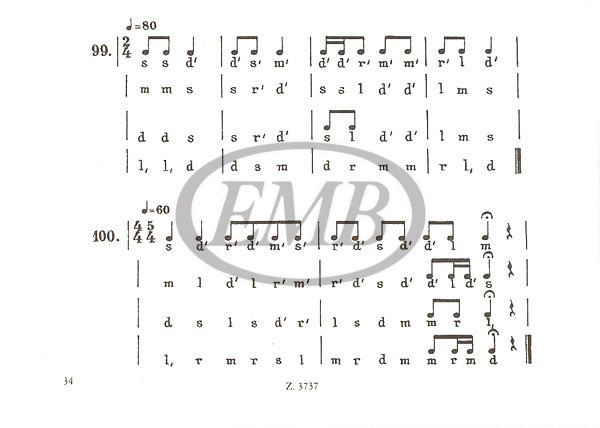
- Notation: Standard music notation for sight-singing exercises
Interesting Facts
- Eastern Origins of Hungarian Music: This volume, alongside Volume 4 (Chuvash Melodies), clearly demonstrates Kodály's ethnomusicological thesis regarding the eastern roots of Hungarian folk music. Kodály and Bartók found that the pure pentatonic scale, common in archaic Hungarian songs, was perfectly intact in the folk music of the Mari and Chuvash peoples.
- Finno-Ugric Kinship: The Mari people, historically known as the Cheremis, belong to the Finno-Ugric language family, related to Hungarian. Kodály used their melodies to show that musical connections, particularly the use of the pentatonic scale, predate later European influences on Hungarian music.
- The Importance of Melody: For the first time in the Ötfokú zene series, Kodály regularly introduced tempo markings in the Mari melodies. Musicologists believe this was done because, unlike familiar Hungarian folk songs, the tempo of these "foreign-sounding" melodies was not naturally apparent to the student.
Érdekességek (Hungarian)
- A Magyar Zene Keleti Eredete: Ez a kötet, a 4. kötettel (Csuvas dallamok) együtt, egyértelműen bizonyítja Kodály népzenekutatói tézisét a magyar népzene keleti gyökereiről. Kodály és Bartók felfedezték, hogy az archaikus magyar dalokban előforduló tiszta pentaton skála érintetlenül fennmaradt a mari és csuvas nép zenéjében.
- Finnugor Rokonság: A mari nép, akiket korábban cseremisznek is neveztek, a magyarral rokon finnugor nyelvcsaládhoz tartozik. Kodály a dalaikat felhasználva mutatta be, hogy a zenei kapcsolatok, különösen a pentaton hangsor használata, megelőzik a magyar zenére gyakorolt későbbi európai hatásokat.
- A Dallam Fontossága: Az Ötfokú zene sorozatban Kodály ebben a kötetben alkalmazott először rendszeresen tempójelzéseket. Zenetudósok szerint ez azért történt, mert a megszokott magyar népdalokkal ellentétben ezen "idegen hangzású" dallamok tempója nem volt magától értetődő a hallgató számára.
Publishers
Editio Musica Budapest Zeneműkiadó Editio Musica Budapest (EMB) is the foremost publisher of Hungarian musical works, playing a critical role in preserving and disseminating the legacy of Zoltán Kodály. Their commitment ensures that these definitive music theory and solfege texts remain available to a global educational audience.
We value your feedback! Share your experience with this product to help others make informed decisions. Your review is important to us!
Hashtags
#KodalyMethod #ZoltanKodaly #MariMelodies #PentatonicMusic #Solfege #MusicEducation #MusicTheoryBooks #HungarianMusicRoots #ÖtfokúZene #Ethnomusicology #EditioMusicaBudapest #SightSinging
Hashtagek (Hungarian)
#KodályZoltán #ÖtfokúZene3 #MariDallamok #Szolfézs #Zeneelmélet #Zenepedagógia #MagyarZeneiGyökerek #Kotta #BuyOnlineKodaly