Description
Renaissance Wit: Orlando di Lasso's Zsoldos szerenád (Matona mia cara) and Gumpelzhaimer's Festive Canon
Product Details
- Product Type: Sheet Music / Choral Score
- Title: Zsoldos szerenád (Matona mia cara) / Ünnepi zene - kánon 5 szólamra (Soldier's Serenade / Festive Music - Canon for 5 Voices)
- Composers: Orlando di Lasso (Lassus) and Adam Gumpelzhaimer
- Translator (Hungarian Text): Szabó Miklós
- Editor/Arranger: Forrai Miklós
- Brand/Publisher: Editio Musica Budapest Zeneműkiadó
- ISMN: 9790080001882 / 979-0080001882
- Item Number: 188
- Genre: Choral Work (Kórusmű), Secular Madrigal, Canon
- Style: Renaissance/Early Baroque A Cappella
- Setting: Mixed Voices (Vegyeskar a cappella)
- Instrumentation: SATB (Lasso) and 5-part Canon (Gumpelzhaimer)
- Language: Hungarian (Translated Text)
- Grade: 3 (Intermediate)
- Duration: Approx. 3 min.
- Period: Renaissance / Early Baroque
- Year Published: 1951
- Origin: Made in Hungary
Overview
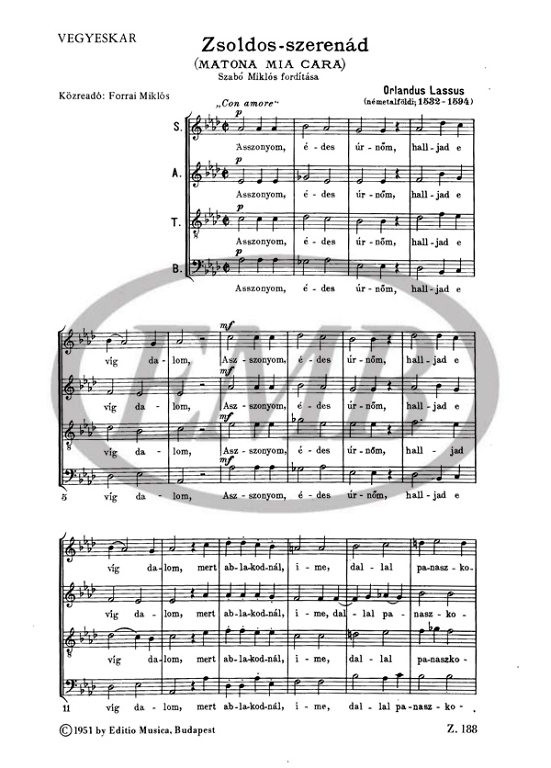
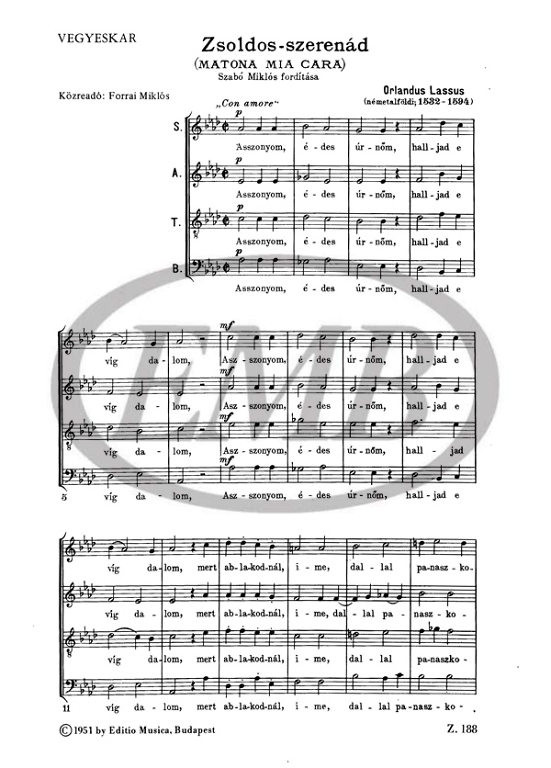
This classic 1951 Editio Musica Budapest (EMB) publication, expertly edited by Forrai Miklós with Hungarian translation by Szabó Miklós, pairs two gems of Renaissance/Early Baroque choral music: Orlando di Lasso’s famous, humorous madrigal "Zsoldos szerenád" (Matona mia cara) and Adam Gumpelzhaimer’s "Ünnepi zene - kánon 5 szólamra" (Festive Music - Canon for 5 Voices).
Lasso's "Matona mia cara" is a renowned secular piece, often called the "Soldier's Serenade," known for its witty text describing a clumsy, boastful soldier attempting to woo a woman. Gumpelzhaimer's Canon offers a contrasting, structured yet joyful exercise in polyphony. These pieces are highly valued in choral pedagogy for developing rhythmic vitality, clarity of text delivery, and harmonic awareness in the a cappella style. Graded at a level 3, this is ideal intermediate repertoire for mixed choirs (SATB) .
Áttekintés (Hungarian Overview)
Ez a klasszikus, 1951-es Editio Musica Budapest (EMB) kiadvány, amelyet Forrai Miklós gondosan szerkesztett, és a magyar fordítást Szabó Miklós készítette, a reneszánsz/korai barokk kóruszene két gyöngyszemét párosítja: Orlando di Lasso híres, humoros madrigálját, a "Zsoldos szerenád"-ot (Matona mia cara), és Adam Gumpelzhaimer "Ünnepi zene - kánon 5 szólamra" című művét.
Lasso "Matona mia cara" című műve egy neves világi darab, amelyet gyakran "Zsoldos szerenád"-nak hívnak, és a szövege egy ügyetlen, hencegő katonát ír le, aki megpróbál udvarolni egy nőnek. Gumpelzhaimer kánonja kontrasztos, strukturált, mégis örömteli gyakorlatot kínál a polifóniában. Ezeket a darabokat nagyra értékelik a kóruspedagógiában, mivel fejlesztik a ritmikai vitalitást, a szöveg tisztaságát és a harmóniai érzékelést az a cappella stílusban. 3-as nehézségi fokozatú lévén, ideális középhaladó repertoár vegyeskarok számára (SATB).
Product Features
- Length: 6 pages (Concise choral scores)
- Dimensions: B/5 format (17 x 24 cm) – Convenient size for choral singers.
- Period: Renaissance / Early Baroque (c. 16th–17th Centuries)
- Instrumentation: SATB Mixed Chorus (Lasso) and 5-Part Vocal Canon (Gumpelzhaimer).
- Language: Hungarian translation of the original text.
Interesting Facts
- Orlando di Lasso (1532–1594): One of the most important composers of the late Renaissance. "Matona mia cara" is one of his most popular and famous secular pieces, originally sung in a mix of Italian and German patois, showcasing the playful side of Renaissance music.
- Adam Gumpelzhaimer (1559–1625): A German composer and theorist known for his sacred music and clear, instructional works, including canons, which were key educational tools during the Baroque transition.
- Forrai Miklós: Editor Forrai Miklós (1913–191) was a highly influential Hungarian conductor and educator, particularly famous for his work with choral music, establishing clear standards for performance and publication in Hungary in the mid-20th century.
Érdekességek (Hungarian Interesting Facts)
- Orlando di Lasso (1532–1594): A késő reneszánsz egyik legfontosabb zeneszerzője. A "Matona mia cara" az egyik legnépszerűbb és leghíresebb világi darabja, eredetileg olasz és német patois keverékén énekelték, bemutatva a reneszánsz zene játékos oldalát.
- Adam Gumpelzhaimer (1559–1625): Német zeneszerző és teoretikus, aki egyházi zenéjéről és tiszta, oktató jellegű műveiről volt ismert, beleértve a kánonokat is, amelyek kulcsfontosságú oktatási eszközök voltak a barokk átmenet idején.
- Forrai Miklós: Forrai Miklós (1913–191) rendkívül befolyásos magyar karnagy és pedagógus volt, különösen a kóruszenei munkásságáért ismert, szilárd normákat állított fel az előadásra és a kiadásra vonatkozóan Magyarországon a 20. század közepén.
Track Listing
(Contains two distinct choral works.)
- Orlando di Lasso: Zsoldos szerenád (Matona mia cara)
- Adam Gumpelzhaimer: Ünnepi zene - kánon 5 szólamra (Festive Music - Canon for 5 Voices)
Publishers
- Editio Musica Budapest Zeneműkiadó
We value your feedback! Share your experience with this product to help others make informed decisions. Your review is important to us!
Hashtags
#OrlandoDiLasso #MatonaMiaCara #Gumpelzhaimer #ForraiMiklós #ChoralMusic #RenaissanceMadrigal #SATB #A Cappella #EMB188 #SoldiersSerenade
Hashtags (Hungarian)
#Lasso #ZsoldosSzerenád #Gumpelzhaimer #ForraiMiklós #Kórusmű #Vegyeskar #Reneszánsz #Kánon #KottaVásárlás