Description
Renaissance Elegance: Two Madrigals by Giovanni Battista Mosto
- Product Type: Sheet Music / Choral Score
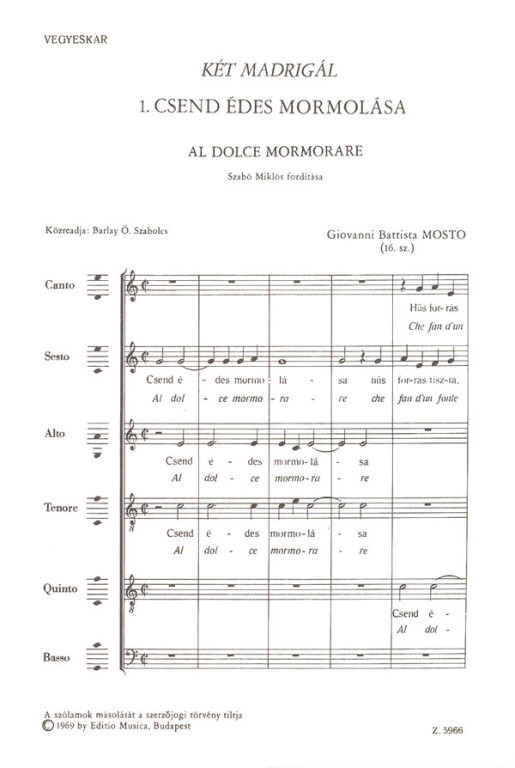
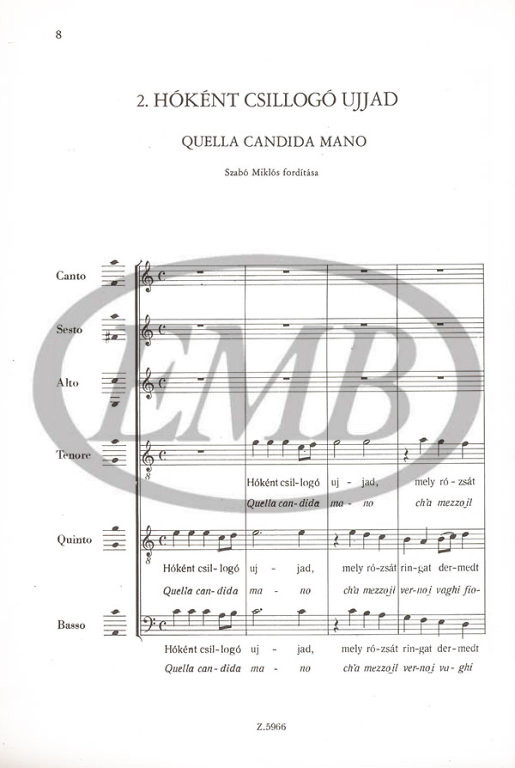
- Title: Two Madrigals / Két madrigál
- Composer: Giovanni Battista Mosto
- Editor: Ö. Szabolcs Barlay
- Translator (Hungarian): Miklós Szabó
- Brand Name: Editio Musica Budapest Zeneműkiadó
- MPN / Item Number: 5966
- ISMN: 9790080059661
- Genre: Choral Work / Sacred & Secular Renaissance
- Style: Late Renaissance Madrigal
- Setting: Mixed Voices (Vegyeskar)
- Instrumentation: SSATTB (Soprano I, Soprano II, Alto, Tenor I, Tenor II, Bass) / A cappella
- Language: Hungarian, Italian
- Grade: 2 (Easy/Intermediate)
- Duration: Approx. 3 minutes
- Format: Paperback, B/5 (17x24 cm)
- Length: 16 pages
- Country of Origin: Hungary
Overview
Delve into the lush, six-part polyphony of the late Renaissance with this 1969 edition of Two Madrigals by Giovanni Battista Mosto. Published by Editio Musica Budapest and edited by the scholar Ö. Szabolcs Barlay, this 16-page score features the works "Dolce di mormorio" and "Candida man," rendered with singable Hungarian translations by the renowned Miklós Szabó. Designed for a full SSATTB mixed choir, these pieces showcase the rhythmic fluidity and expressive word-painting characteristic of the Venetian influence. With a difficulty grade of 2, these madrigals are highly accessible for university ensembles and advanced amateur choirs looking to explore the rich textures of six-voice a cappella singing.
Áttekintés
Mélyedjen el a késő reneszánsz dús, hatszólamú polifóniájában Giovanni Battista Mosto Két madrigál című művének 1969-es kiadásával. Az Editio Musica Budapest gondozásában, Barlay Ö. Szabolcs szerkesztésében megjelent 16 oldalas kotta a neves Szabó Miklós énekelhető magyar műfordításaival tartalmazza a darabokat. A hatszólamú vegyeskarra (SSATTB) írt művek hűen tükrözik a velencei iskola ritmikai hajlékonyságát és kifejező zenei képfestését. A 2-es nehézségi fokozatnak köszönhetően ezek a madrigálok kiválóan alkalmasak egyetemi énekkarok és haladó amatőr kórusok számára, akik a hatszólamú a cappella éneklés gazdag hangzását szeretnék felfedezni.
Product Features
- Six-Part Scoring: SSATTB arrangement provides a grand, orchestral-like vocal texture.
- Bilingual Versatility: Includes both the original Italian poetry and poetic Hungarian translations.
- Scholarly Editing: Edited by Ö. Szabolcs Barlay, ensuring a clean, historically informed performance score.
- Pedagogical Accessibility: Rated at Grade 2, allowing choirs to achieve professional-sounding Renaissance polyphony without extreme technical hurdles.
Interesting Facts
- The Composer: Giovanni Battista Mosto (d. 1596) was a prominent Italian composer and student of Claudio Merulo. He served as the maestro di cappella at the Padua Cathedral and later worked at the court of Prince Sigismund Báthory in Transylvania, creating a direct historical link to Hungarian musical heritage.
- The Translator: Miklós Szabó was a Liszt Prize-winning conductor and educator, widely respected for his ability to translate Renaissance texts while perfectly preserving the musical accents and phrasing.
- The Style: These madrigals represent the high point of Italian secular music, where the music is intimately tied to the emotional nuances of the text—a technique known as "madrigalisms."
- Historical Context: Released in September 1969, this edition was part of a movement to revitalize Renaissance choral music in Hungary, bringing forgotten masters to the forefront of the national repertoire.
Érdekességek
- A zeneszerző: Giovanni Battista Mosto (meghalt 1596-ban) neves olasz zeneszerző, Claudio Merulo tanítványa volt. A padovai székesegyház karnagyaként szolgált, majd később Erdélyben, Báthory Zsigmond udvarában dolgozott, így közvetlen történelmi kapcsolata van a magyar zenei múlttal.
- A fordító: Szabó Miklós Liszt-díjas karnagy és pedagógus volt, akit nagy tisztelet övezett a reneszánsz szövegek zenei hangsúlyokat és frázisokat megőrző fordításaiért.
- A stílus: Ezek a madrigálok az olasz világi zene csúcspontját képviselik, ahol a zene szorosan kötődik a szöveg érzelmi árnyalataihoz – ezt a technikát nevezzük „madrigalizmusnak”.
- Történelmi háttér: Az 1969 szeptemberében megjelent kiadvány a magyarországi reneszánsz kóruszene újjáélesztésének részeként született meg, elfeledett mestereket emelve a nemzeti repertoárba.
Contents / Tartalomjegyzék
- Giovanni Battista Mosto: Csend édes mormolása (Sweet Murmur of Silence / Dolce di mormorio)
- Giovanni Battista Mosto: Hóként csillogó ujjad (Your Finger Glistening Like Snow / Candida man)
Publishers
Editio Musica Budapest Zeneműkiadó (Published September 1969)
We value your feedback! Share your experience with this product to help others make informed decisions. Your review is important to us!
#ChoralMusic #Renaissance #GiovanniBattistaMosto #SheetMusic #MixedChorus #Madrigal #HungarianChoir #EditioMusicaBudapest #Kórusmű #Vegyeskar #Kotta #Régizene #Polyphony