Description
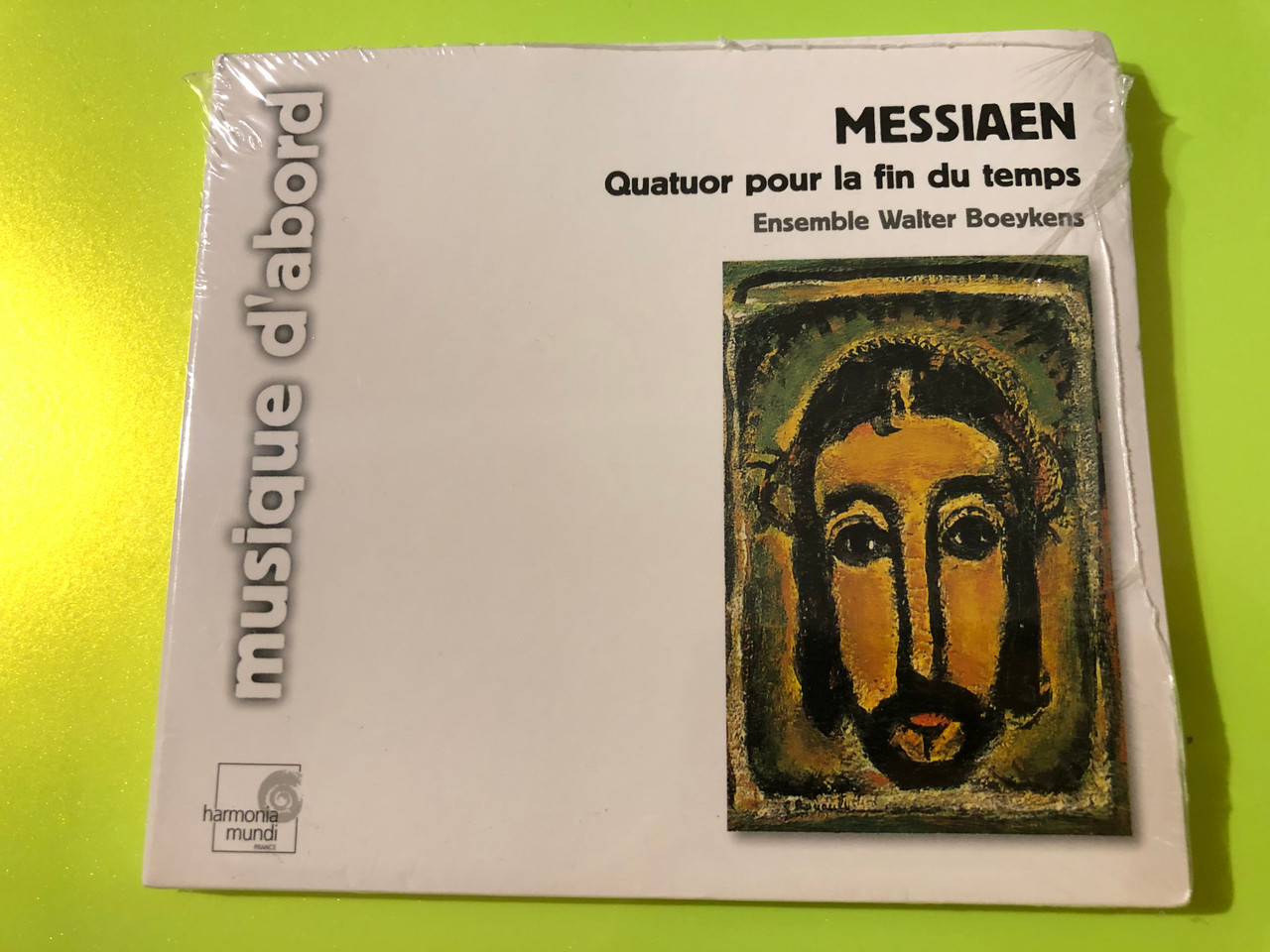
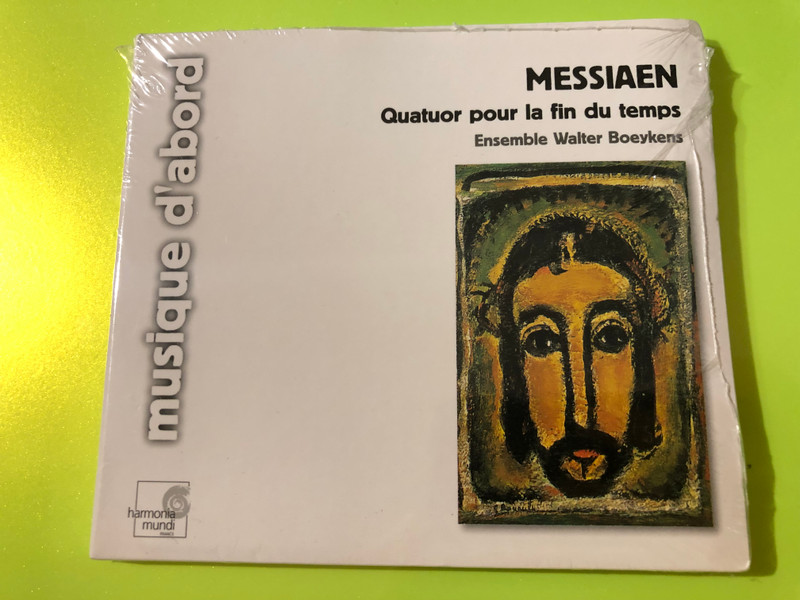
Olivier Messiaen: Quatuor pour la fin du temps CD by Ensemble Walter Boeykens & Harmonia Mundi
Vadonatúj! Gyári csomagolásban! Fóliázott! Mint a képen! Vásároljon bizalommal! Foliaban!
Brand new! Factory packaged! As pictured! Buy with confidence!
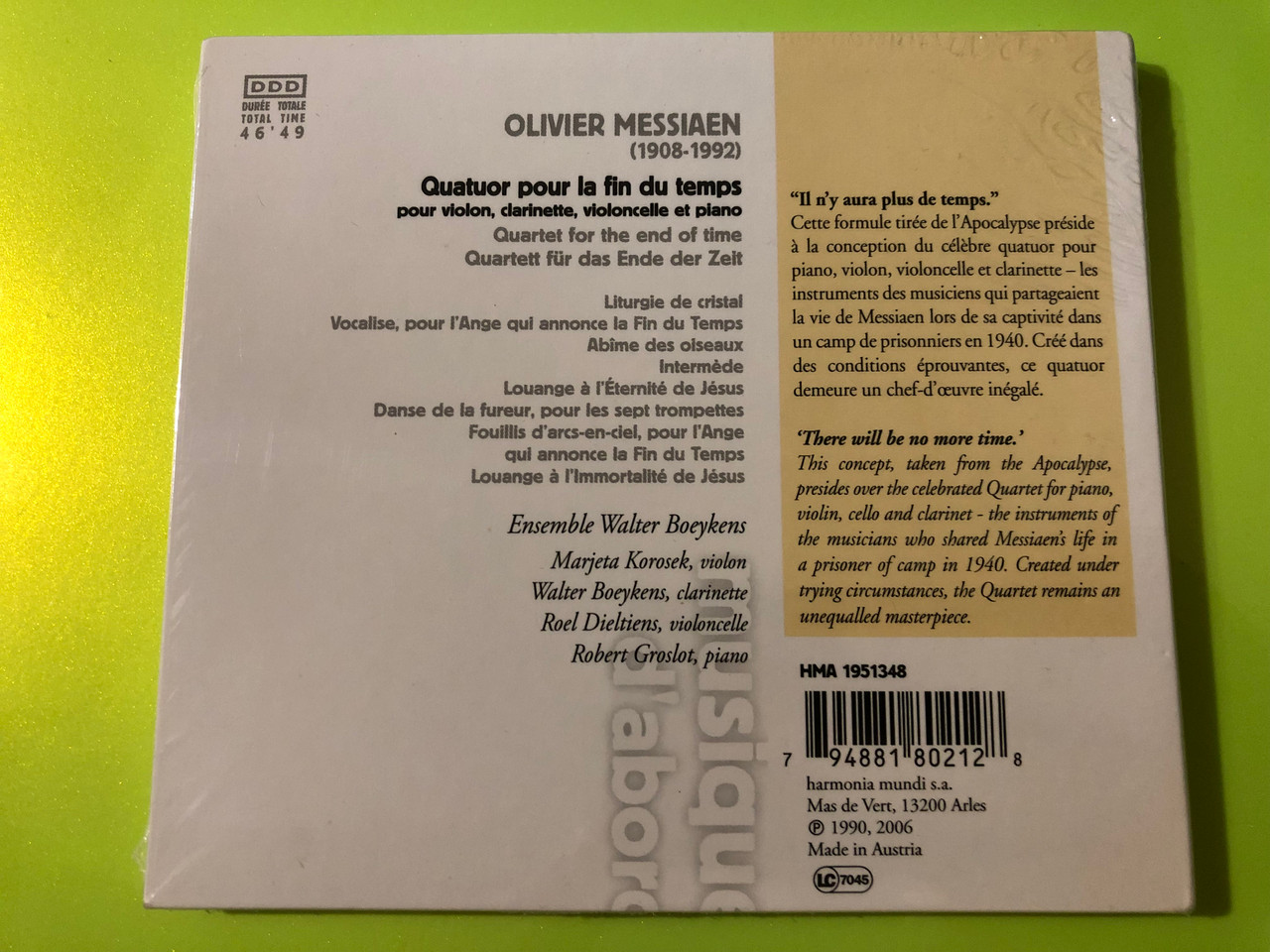
- UPC: 794881802128
- Product Type: Music CD
- Brand Name: Harmonia Mundi (Musique d'Abord Series)
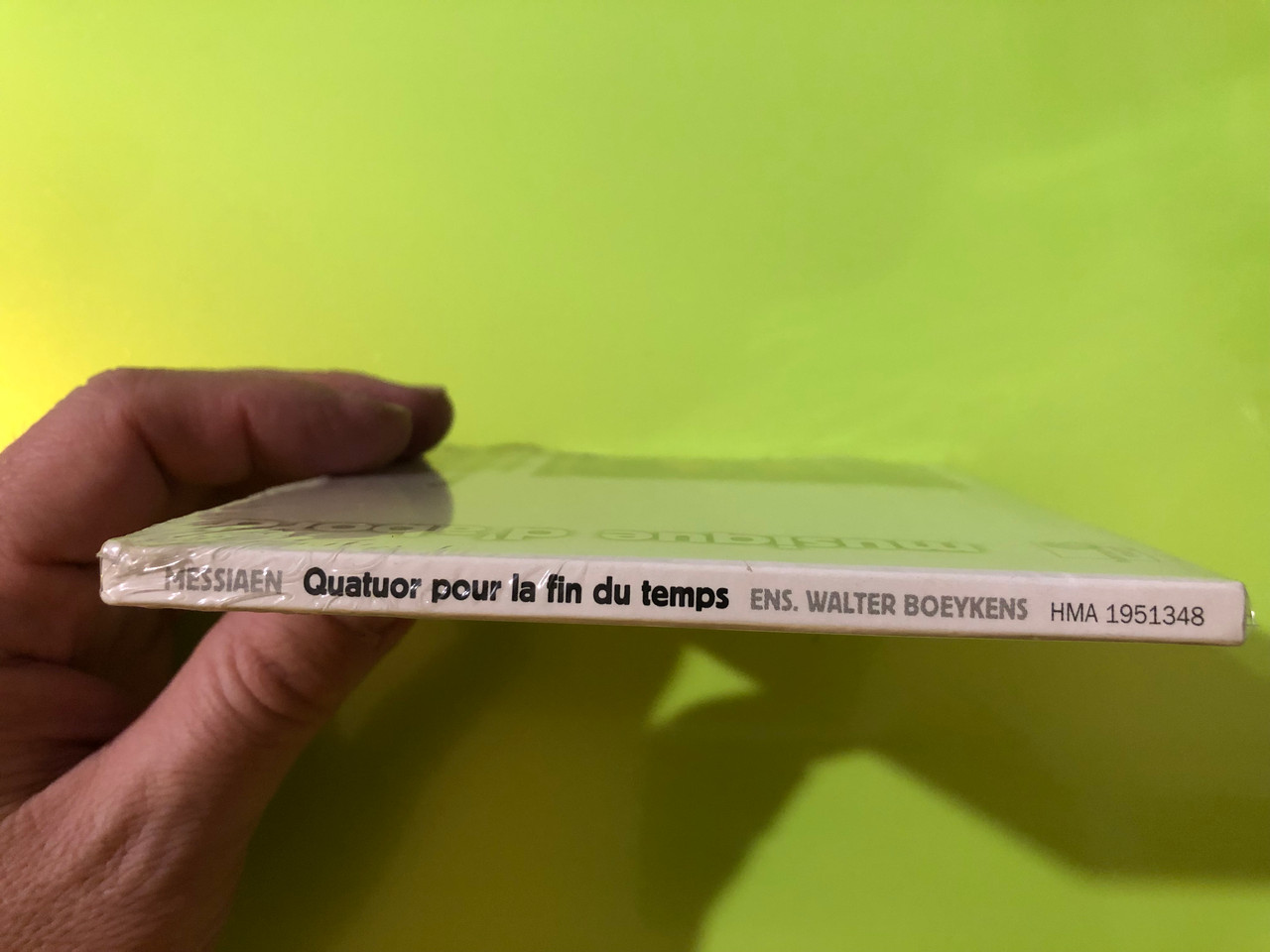
- MPN: HMA 1951348
- Genre: Classical / 20th Century
- Style: Chamber Music / Avant-Garde / Mysticism
- Composer: Olivier Messiaen (1908–1992)
- Ensemble: Ensemble Walter Boeykens
- Performers: Marjeta Korosek (Violin), Walter Boeykens (Clarinet), Roel Dieltiens (Cello), Robert Groslot (Piano)
- Release Year: 1990 (Original), 2006 (Musique d'Abord Reissue)
Product Features
- Format: Compact Disc (CD)
- Total Time: 46:49
- Recording Type: DDD (Full Digital)
- Series: Musique d'Abord (Harmonia Mundi's acclaimed budget/education series)
- Packaging: Digipack with informative bilingual liner notes
- Manufacturing: Made in Austria
Overview
Olivier Messiaen’s Quatuor pour la fin du temps (Quartet for the End of Time) is widely regarded as one of the most profound and spiritually significant chamber works of the 20th century. This recording by the Ensemble Walter Boeykens is celebrated for its clarity and emotional depth, capturing the ethereal beauty and apocalyptic power of Messiaen's vision. Written under extraordinary circumstances, the eight-movement work is a meditation on the Book of Revelation, blending complex rhythms with bird-song transcriptions and "rainbow" harmonies. The Ensemble Walter Boeykens delivers a performance that is both technically flawless and deeply resonant, making this edition an essential cornerstone for any classical music collection.
Áttekintés
Olivier Messiaen Quatuor pour la fin du temps (Kvartett az idők végezetére) című művét a 20. század egyik legmélyebb és lelkileg legjelentősebb kamaraművének tartják. Az Ensemble Walter Boeykens ezen felvétele híres tisztaságáról és érzelmi mélységéről, hűen tükrözve Messiaen látomásának éteri szépségét és apokaliptikus erejét. A rendkívüli körülmények között íródott, nyolctételes mű a Jelenések könyvének zenei meditációja, amelyben az összetett ritmusok madárdal-átiratokkal és "szivárványos" harmóniákkal ötvöződnek. Az Ensemble Walter Boeykens technikailag hibátlan és mélyen megrendítő előadása alapművé teszi ezt a kiadást minden komolyzenei gyűjteményben.
Interesting Facts
- Born in Captivity: Messiaen composed the quartet in 1940 while he was a prisoner of war at Stalag VIII-A in Görlitz, Germany. He wrote it specifically for the fellow musicians he found in the camp: a violinist, a cellist, and a clarinetist.
- The Premiere: The work was first performed on January 15, 1941, in a freezing cold barracks before an audience of 400 to 5,000 prisoners (accounts vary). Messiaen played a beat-up upright piano with keys that frequently stuck.
- Symbolism of Eight: The quartet has eight movements, moving beyond the traditional seven days of creation to symbolize the "eighth day" of eternity—the unchanging light and peace after the end of time.
- Biblical Inspiration: The title and movements are inspired by the Angel of the Apocalypse in the Book of Revelation, who raises a hand to heaven and declares, "There will be no more time."
- Birdsong: Messiaen, an avid ornithologist, transcribed the calls of the blackbird and nightingale into the first movement (Liturgie de cristal), viewing birds as the "servants of the immaterial."
Érdekességek
- Fogságban született: Messiaen 1940-ben, a németországi Görlitzben lévő Stalag VIII-A hadifogolytáborban komponálta a kvartettet. Kifejezetten a táborban talált zenésztársai számára írta: egy hegedűsnek, egy gordonkásnak és egy klarinétosnak.
- A premier: A művet 1941. január 15-én mutatták be egy jéghideg barakkban, 400 és 5000 közötti fogolytársuk előtt (a források eltérőek). Messiaen egy lestrapált pianínón játszott, amelynek billentyűi gyakran beragadtak.
- A nyolcas számmisztika: A kvartett nyolc tételből áll, túllépve a teremtés hagyományos hét napján, hogy az örökkévalóság "nyolcadik napját" jelképezze – a változatlan fényt és békét az idők végezetén túl.
- Bibliai ihlet: A címet és a tételeket a Jelenések könyvének apokaliptikus angyala ihlette, aki kezét az ég felé emelve kijelenti: "Nem lesz többé idő."
- Madárdal: Messiaen, aki lelkes ornitológus volt, a feketerigó és a fülemüle énekét kottázta le az első tételhez (Liturgie de cristal), a madarakat az "anyagtalan világ szolgálóinak" tekintve.
Track Listing
- Liturgie de cristal (2:39)
- Vocalise, pour l'Ange qui annonce la fin du Temps (5:13)
- Abîme des oiseaux (7:33)
- Intermède (1:39)
- Louange à l'Éternité de Jésus (8:29)
- Danse de la fureur, pour les sept trompettes (6:34)
- Fouillis d'arcs-en-ciel, pour l'Ange qui annonce la fin du Temps (7:14)
- Louange à l'Immortalité de Jésus (7:08)
Publishers
- Label: Harmonia Mundi (HMA 1951348)
- Copyright: ℗ 1990, 2006
- Location: Harmonia Mundi s.a., Mas de Vert, 13200 Arles
We value your feedback! Share your experience with this product to help others make informed decisions. Your review is important to us!