Description
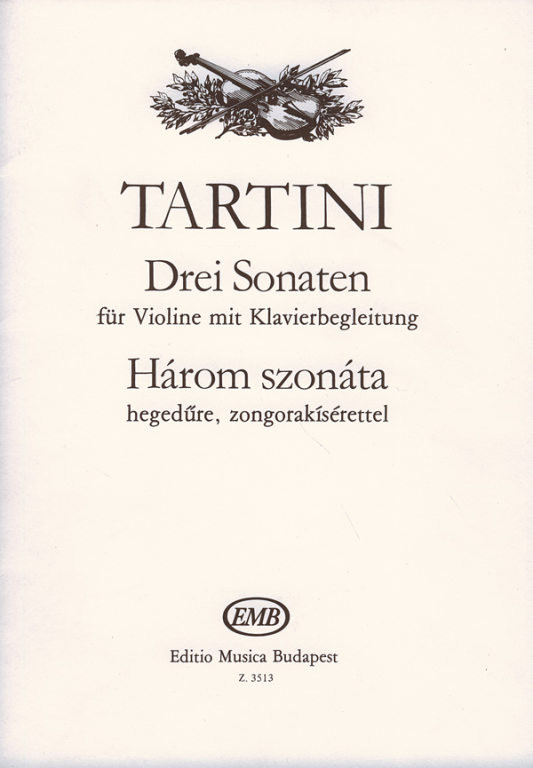
Giuseppe Tartini: Three Sonatas for Violin and Piano (Három szonáta)
Product Details
-
Product Type: Sheet Music / Score Collection
-
Composer: Giuseppe Tartini
-
Work Title: Three Sonatas (Három szonáta)
-
Instrumentation/Setting: Violin Solo with Piano Accompaniment (reduction)
-
Period: Baroque (specifically, Late Baroque/Pre-Classical)
-
Editor/Arranger: Sándor Frigyes, Nagy Olivér
-
Publisher: Editio Musica Budapest Zeneműkiadó
-
Year Published: 1963
-
MPN (Item Number): 3513
-
ISMN: 9790080035139 / 979-0080035139
-
Format: Paperback (A/4 format)
-
Length: 56 Pages
-
Weight: 0.156 kg
-
Origin: Made in Hungary
Overview
This 1963 edition from Editio Musica Budapest (EMB) presents Three Sonatas by Giuseppe Tartini, transcribed and edited for solo violin and piano accompaniment by the notable Hungarian musicians Frigyes Sándor and Olivér Nagy. Tartini (1692–1770) was an Italian Baroque master, renowned for his expressive melodic writing and technical innovations for the violin.
These sonatas are fundamental teaching material, offering intermediate to advanced students a crucial gateway into the expressive demands of 18th-century violin repertoire. The edition, arranged for modern performance practice with piano reduction of the basso continuo, provides a scholarly yet practical approach to Tartini's lyrical and often technically demanding works. The collaboration between the esteemed violinist Frigyes Sándor (providing performance indications) and Olivér Nagy (realizing the piano part) ensures a definitive and pedagogically sound resource.
Áttekintés
Ez az 1963-as Editio Musica Budapest (EMB) kiadvány Giuseppe Tartini Három szonátáját tartalmazza, amelyet a szóló hegedűre és zongorakíséretre a neves magyar zenészek, Sándor Frigyes és Nagy Olivér dolgoztak át és szerkesztettek. Tartini (1692–1770) olasz barokk mester volt, aki a hegedűre írt kifejező dallamairól és technikai újításairól volt híres.
Ezek a szonáták alapvető oktatási anyagok, amelyek elengedhetetlen bevezetést nyújtanak a 18. századi hegedűrepertoár kifejező követelményeibe a középhaladó és haladó diákok számára. A modern előadói gyakorlatnak megfelelően, a basso continuo zongorakivonatával átdolgozott kiadás tudományos, mégis gyakorlati megközelítést biztosít Tartini lírai és gyakran technikailag igényes műveihez. A neves hegedűművész, Sándor Frigyes (előadói jelzésekkel) és Nagy Olivér (a zongoraszólam megvalósításával) közötti együttműködés egy alapvető és pedagógiailag megalapozott forrást eredményezett.
Product Features
-
Core Baroque Repertoire: Contains three sonatas crucial for studying the transition from the Baroque to the Classical era in violin music.
-
Expert Editing: Edited by Frigyes Sándor, a celebrated Hungarian violinist and pedagogue, providing professional bowing and fingering suggestions.
-
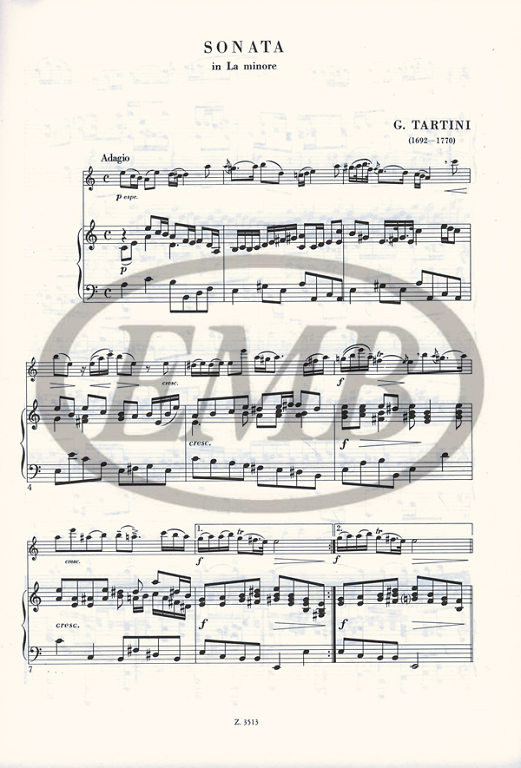
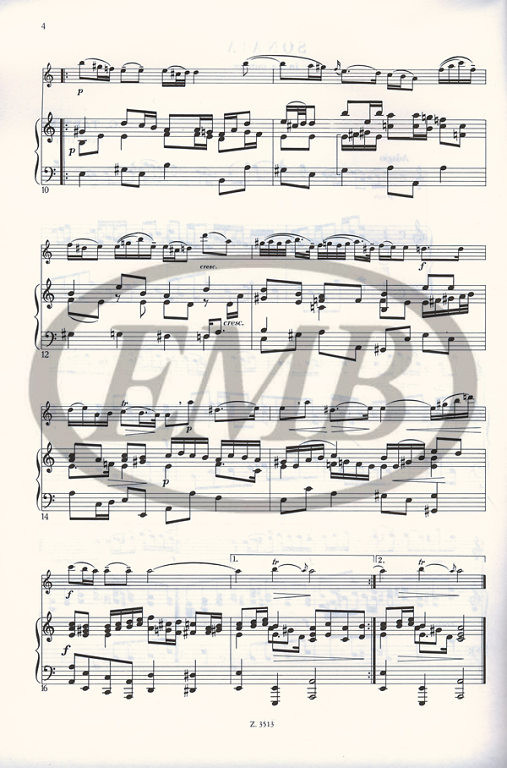
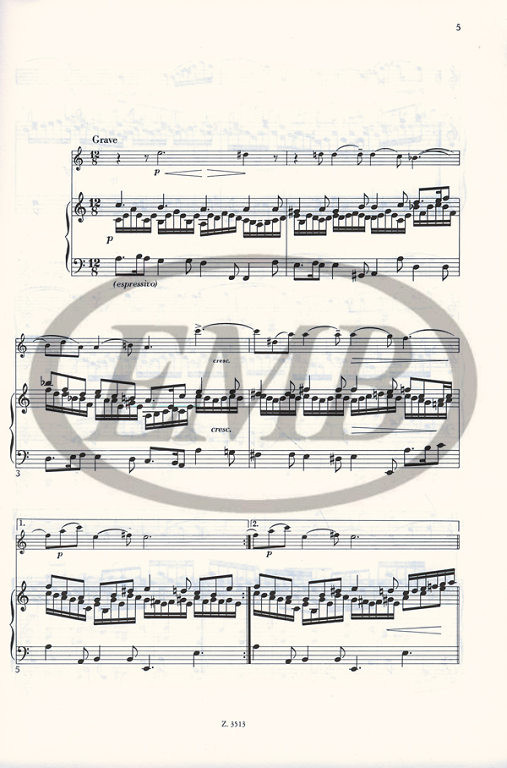
Piano Reduction: Includes the realized piano reduction of the basso continuo, making the sonatas easily performable with an accompanist.
-
A/4 Format: Clear, standard score size for comfortable reading and turning pages during practice.
-
Historical Significance: Represents the high standards of classical repertoire publishing set by EMB in the mid-20th century.
Interesting Facts
-
Giuseppe Tartini's Influence: Tartini was famous not only as a composer but also as a highly influential teacher, running a renowned violin school in Padua. His treatise Treatise on Ornamentation profoundly influenced later violin performance.
-
The Devil's Trill: While not explicitly listed, Tartini’s most famous work, the "Devil's Trill" Sonata, exemplifies his sophisticated use of double stops, bowing effects, and melodic depth, techniques found throughout his sonata writing.
-
The Editors' Roles: In this collaboration, Frigyes Sándor, primarily a violinist and conductor, focused on the solo line's execution (performance indications), while Olivér Nagy, a pianist and pedagogue, handled the demanding task of creating a musical and stylistically appropriate keyboard accompaniment from the original figured bass.
Érdekességek
-
Giuseppe Tartini hatása: Tartini nemcsak zeneszerzőként, hanem nagy hatású tanárként is híres volt, neves hegedűiskolát vezetett Padovában. Díszítési értekezése (Treatise on Ornamentation) nagyban befolyásolta a későbbi hegedűelőadásmódot.
-
Az Ördög trillája: Bár nincs explicit módon felsorolva, Tartini leghíresebb műve, az „Ördög trillája” szonáta példázza a kettős fogások, vonóhatások és a dallami mélység kifinomult használatát, amely technikák megtalálhatók a szonátáiban.
-
A szerkesztők szerepe: Ebben az együttműködésben Sándor Frigyes, aki elsősorban hegedűművész és karmester volt, a szóló szólam előadására (előadási jelzések) összpontosított, míg Nagy Olivér, a zongoraművész és pedagógus, az eredeti számozott basszusból egy zeneileg és stilárisan megfelelő billentyűs kíséret létrehozásának igényes feladatát vállalta.
Publishers
Editio Musica Budapest (EMB)
EMB maintains a global reputation for publishing definitive and practical editions of classical works, ensuring that masters like Tartini remain accessible and central to international instrumental education.
We value your feedback! Share your experience with this product to help others make informed decisions. Your review is important to us!
Hashtags
#TartiniSonatas #ViolinAndPiano #BaroqueViolin #SheetMusic #SándorFrigyes #NagyOlivér #EditioMusicaBudapest #ViolinRepertoire #HáromSzonáta #Kotta #ViolinLessons #BaroqueMusic